




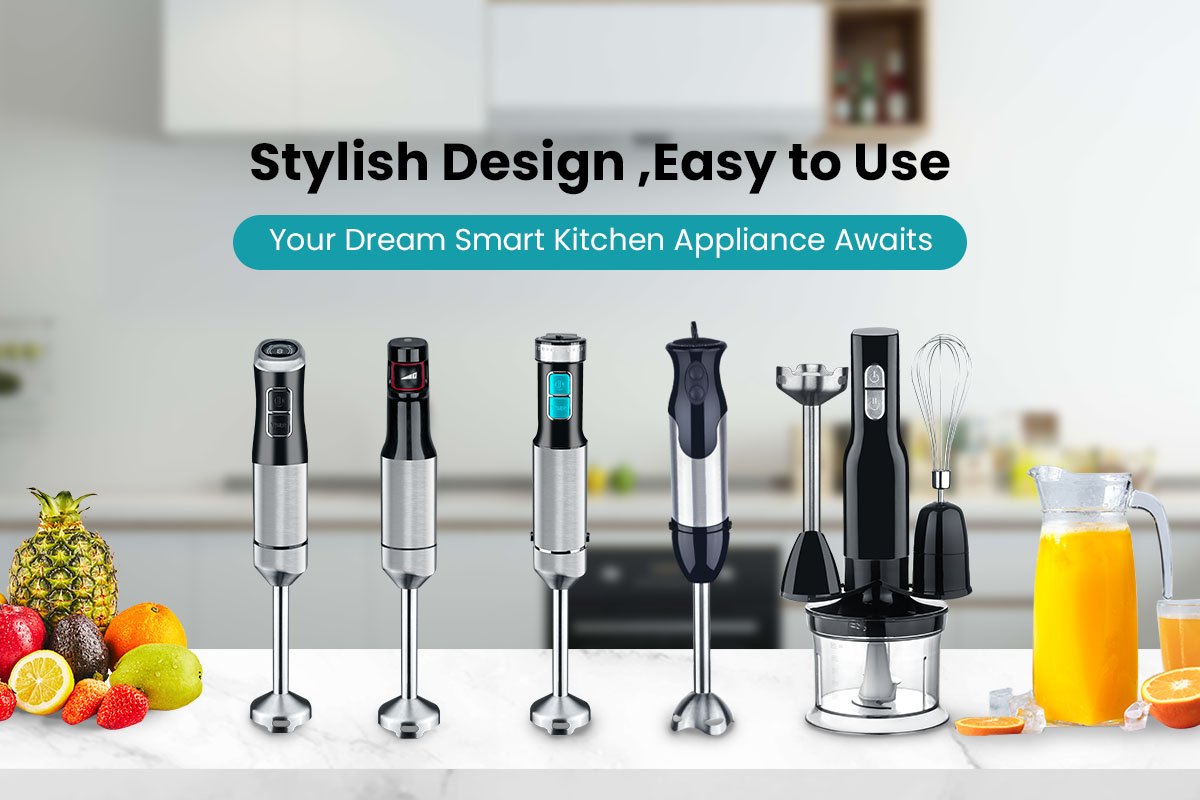
When sourcing kitchen appliances such as blenders, mixers, or hand blenders, understanding the typical production lead time is essential for importers and distributors. Lead time affects inventory planning, seasonal sales preparation, and logistics coordination. The total delivery timeline usually includes production preparation, manufacturing, quality inspection, and export arrangement.
-
2026-03-26
-
2026-03-25Retail chains and large distributors require stable supply when sourcing kitchen appliances such as blenders. Before establishing long-term partnerships, buyers usually evaluate whether a supplier has sufficient production capacity to support continuous large-volume orders. This evaluation typically focuses on several key aspects including factory infrastructure, production systems, quality management, and bulk supply experience.
-
2026-03-24When sourcing blenders for wholesale distribution or private label programs, buyers often need to understand the minimum order quantity required by manufacturers. MOQ for blender manufacturing depends on several factors such as product type, customization level, packaging requirements, and production setup costs. In most cases, factories set MOQ levels to ensure efficient production and cost control.
-
2026-03-23For distributors, retailers, and brand owners launching private label blender products, packaging and branding customization is an important part of the OEM supply process. Professional kitchen appliance manufacturers usually offer multiple options that allow buyers to create products aligned with their brand identity and retail positioning.
-
2026-03-20For retail brands launching private label kitchen appliances, developing a custom blender product usually requires several stages including design confirmation, sample testing, mold preparation, and mass production. The total development timeline depends on the level of customization, product complexity, and certification requirements. In most cases, the complete process typically takes several weeks to a few months.
-
2026-03-19ODM development allows buyers to launch blender products based on a manufacturer’s design platform while customizing key elements for their own brand. To ensure efficient product development and avoid delays during production, buyers usually need to provide several types of technical and commercial information before the project begins.
-
2026-03-18KANGJIA presents itself as a manufacturer integrating development, production, and sales, with product coverage including hand blenders, table blenders, nutrition blenders, and mini choppers, which supports broader OEM project coordination.
-
2026-03-17For distributors, retailers, and brand owners entering the kitchen appliance market, private label blenders are commonly produced through an OEM manufacturing process. OEM production allows buyers to sell blenders under their own brand while the manufacturer handles product design adjustments, manufacturing, and quality control. Understanding how this process works helps buyers manage product development and bulk sourcing more efficiently.
-
2026-03-16When sourcing kitchen appliances such as blenders, mixers, or food processors, importers often need to verify whether a supplier is a real manufacturer or only a trading company. One of the most reliable ways to confirm this is by reviewing official documents that demonstrate production capability, quality management, and export compliance.
-
2026-03-13Blenders designed for international markets must undergo multiple durability and performance tests before entering mass production. These tests ensure that the appliance can operate safely and maintain stable performance during long-term daily use. Professional kitchen appliance manufacturers normally integrate structured testing procedures into their production and quality control systems.
-
2026-03-12For importers sourcing blenders or other small kitchen appliances, verifying a supplier’s production capacity is essential before placing large orders. Production capacity directly affects delivery timelines, product consistency, and long-term supply stability. By evaluating several key factors, buyers can determine whether a blender factory has the manufacturing strength required for bulk supply.
-
2026-03-11When sourcing kitchen appliances such as blenders, mixers, or other small appliances, buyers often need to evaluate whether a supplier has real manufacturing strength. A professional kitchen appliance manufacturer should possess comprehensive production capabilities, stable quality control systems, and strong OEM or ODM development support.